Sub-Total: $0.00
7 Ways to Create a Truly Inclusive Christian Congregation
7 Ways to Create a Truly Inclusive Christian Congregation
Introduction
Building an inclusive Christian congregation is both a calling and an ongoing journey. At Open Circle MCC, we believe every person deserves to be celebrated and welcomed, regardless of background or identity. Explore seven transformative ways to foster a community where everyone truly belongs and flourishes.
Cultivating the Language of Welcome
Words shape reality. In a welcoming church, every greeting and announcement can open a door or close one. Becoming an inclusive Christian congregation starts with language that honors each individual’s story.
Draft a clear church welcome statement that specifically names LGBTQ+ individuals, people of color, people with disabilities, and those exploring faith. Replace generic phrases like “all are welcome” with explicit commitments such as “We celebrate people of every gender identity, sexual orientation, race, and ability.” Review signage, social media, and printed materials quarterly for language that assumes heteronormativity or able-bodiedness and update as needed. Train greeters to introduce themselves with pronouns and avoid honorifics that may misgender guests.
At Open Circle MCC, our website declares, “A LGBTQ+ affirming church where love is our greatest moral value.” Such transparency signals spiritual inclusion even before anyone enters.
Key takeaway: Intentional language cultivates a culture where newcomers immediately feel, “I belong here.”
Designing Worship That Reflects Every Voice
Worship shapes connection. Open Circle MCC blends hymns, gospel, and Latin rhythms, creating diverse worship that is both rooted and innovative.
Alternate worship leaders, including teens, elders, and people with disabilities, to demonstrate church inclusivity. Rotate instruments weekly, from acoustic guitar to African djembe, embracing varied musical traditions. Incorporate languages spoken in the local community, such as Spanish, Creole, and American Sign Language, in prayers and music. Ensure barrier-free worship with large-print lyrics, hearing-assist loops, and accessible spaces for service animals. Implement at least one new accessibility idea quarterly, inspired by leading disability ministry research.
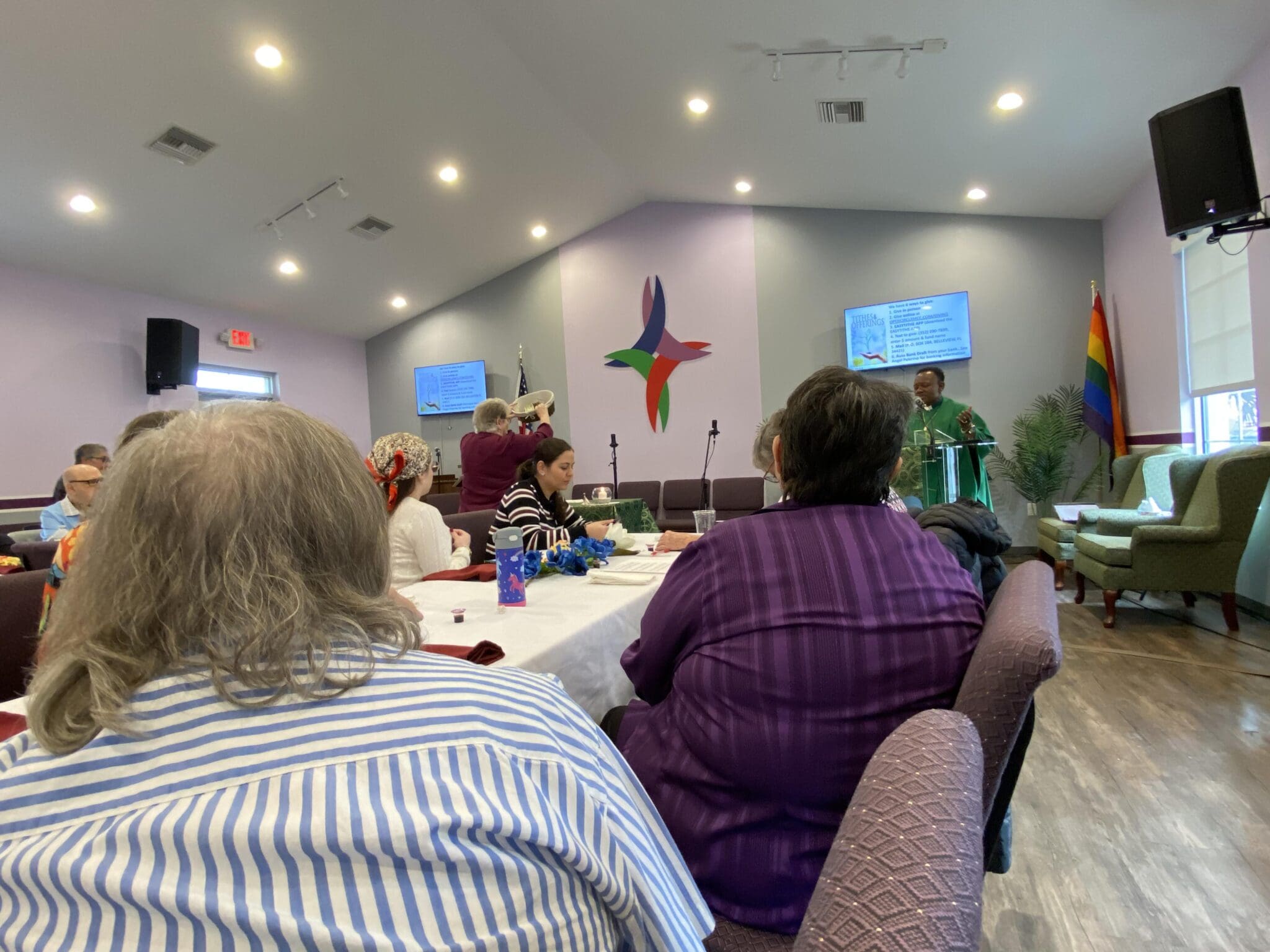
Open communion is central: anyone—member, guest, or seeker—can participate. This practice proclaims, “Grace has no gatekeepers,” distinguishing Open Circle MCC as an open and affirming church.
Building Bridges Through Intersectional Community Engagement
Intersectionality recognizes that people carry multiple identities. A young Black lesbian with limited income experiences church differently than a retired white veteran. Embracing these layers is essential for an affirming church.
Map local demographics to identify areas of food insecurity, migrant populations, and isolated seniors. Collaborate with trusted agencies serving marginalized groups, such as Belleview Senior Services, Ocala Pride, and disability resource organizations. Form volunteer teams that blend ages and races. Research shows two-thirds of U.S. congregations remain homogenous, but mixed teams foster diversity in church life. Host forums on justice issues like racial equity and affordable housing, guided by an intersectional framework.
Track progress using metrics such as the number of partner events, volunteer diversity, and collected stories, then adjust strategies annually.
Nurturing Spiritual Growth Without Barriers
Spiritual growth should never be hindered by obstacles. Open Circle MCC is devoted to removing barriers so everyone can pursue faith and transformation.
Offer study groups in hybrid formats to include remote members and those with health concerns. Design physical spaces to be airy and flexible, using chairs instead of fixed pews for accessibility. Provide pastoral care through various channels—phone, text, or informal gatherings—to ease social anxiety. Promote a culture where questions and doubts are welcomed, fueling progressive Christianity and deeper spiritual growth.
Even online, individuals can connect through blogs and resources, ensuring everyone feels part of the Christian community, regardless of attendance.
Embracing Digital Presence as a Gateway to Inclusion
As more people engage online, a dynamic digital presence is vital. A strong online church presence ensures seekers find community before doubts hold them back.
Create an ADA-compliant website with accessible fonts, high contrast, and descriptive alt-text. Highlight your inclusive church identity on every page to boost visibility and church SEO. Stream worship services with captioning and live chat moderators trained in trauma-informed language. Host Instagram takeovers by younger members, resonating with rising Gen Z church attendance. Launch micro-groups on the MCC Connect app for prayer, volunteering, and devotionals.
Regularly review digital content to ensure it reflects the congregation’s diversity, featuring photos, stories, and sermon highlights that let every visitor see themselves represented.
What Sets Our Ministry Resources Apart
Every resource is crafted with care, reflecting our vision for barrier-free faith. Purchases support scholarships for Belleview youth to attend MCC conferences, multiplying the impact of your engagement.
Blended Worship Guides combine hymnody, contemporary chords, and global rhythms, crafted by Belleview musicians. Open Communion Kits feature locally sourced gluten-free bread and compostable cups, making communion earth-friendly and inclusive. The Intersectional Bible Study Series is authored by theologians of varied races, genders, and abilities. The Digital Accessibility Checklist is tested with disability advocates and helps communities audit their online presence.
These resources are available as downloadable samples, full sets for choirs, or as bundles with leader’s notes and Zoom background graphics. Use them during home visits, hospital chaplaincy, or virtual meetings to extend inclusion beyond the sanctuary.
Prioritizing Ongoing Education and Self-Reflection
Inclusion is a continual practice, not a one-time achievement. Ongoing education and reflection are key to sustaining an affirming church environment.
Host quarterly trainings on anti-racism, gender identity, and disability theology. Start book clubs with titles like “Radical Welcome” by Stephanie Spellers. Provide anonymous feedback boxes, both digital and physical, for members to share concerns. Encourage leaders to maintain a bias journal for ongoing self-reflection.
Open Circle MCC’s growth from six founders to a thriving network illustrates the power of continuous learning and adaptation.
Celebrating Diversity Through Fellowship and Shared Leadership
Fellowship and shared leadership are at the heart of genuine inclusion. Sharing meals and responsibilities builds trust and unity.
Host monthly “Taste of the Nations” potlucks, inviting dishes that reflect family heritage. Organize storytelling nights co-hosted by elders and teens to foster intergenerational bonds. Rotate board seats annually, reserving spots for members under 30 and LGBTQ+ voices. Pair new attendees with “Circle Companions”—members trained to listen and support.
In Belleview, gathering under live oaks after Sunday worship encourages spontaneous conversation and reinforces the welcoming church atmosphere.
Key takeaway: When leadership reflects the congregation, trust grows, and diversity in church life becomes a reality.
Invitation to Join the Circle
Creating a truly inclusive Christian congregation requires nurturing welcoming language, designing worship that honors every voice, engaging intersectionally, removing growth barriers, amplifying digital presence, fostering continuous learning, and celebrating diversity through shared leadership. Open Circle MCC embodies each principle, inviting neighbors and online friends into a vibrant faith community. Experience radical hospitality and lasting connection—discover more at Events.
References